CSMUH Hosts Head and Neck Cancer Health Seminar Focusing on New Trends in BNCT and Nutritional Care to Help Patients Regain Confidence in Treatment
2026-05-20
Source: Economic Daily News (Taiwan)
Chung Shan Medical University Hospital Hosts Head and Neck Cancer Health Seminar
Focusing on New Trends in BNCT and Nutritional Care to Help Patients Regain Confidence in Treatment
To enhance awareness among head and neck cancer patients and their families regarding emerging therapies and nutritional care, a health seminar co-organized by Chung Shan Medical University Hospital (CSMUH) and the Head and Neck Cancer Care Association of the Republic of China, and co-sponsored by Heron Neutron Medical Corp., was held last Saturday on the 3rd floor of the Cheng-Ching Building at CSMUH. The event invited patients, caregivers, and members of the public to gain a deeper understanding of new developments in head and neck cancer treatment and nutritional care concepts.
The seminar focused on the theme “Understanding Precision Radiotherapy – BNCT and Future Trends,” and featured presentations from a professional medical team. The session was opened by Dr. Hsien-Chun Tseng, Director of the Department of Radiation Oncology at CSMUH, who noted that re-irradiation is often particularly challenging for patients with head and neck cancer. Boron Neutron Capture Therapy (BNCT), as a form of precision radiotherapy, may offer a new option with comparatively fewer side effects for patients requiring re-irradiation, as it can more precisely target tumors while minimizing damage to normal tissues.
Subsequently, Dr. Chih-Ying Liao, Attending Physician in the Photon Radiotherapy Division of the Department of Radiation Oncology at China Medical University Hospital, introduced the current development and future trends of BNCT, explaining its mechanism of action, clinical potential, and latest progress in the treatment of head and neck cancer. This helped patients and families gain a more comprehensive understanding of emerging cancer treatment options.
Dr. Liao also noted that BNCT previously relied on nuclear reactors as neutron sources. However, through the efforts of Taiwanese companies and medical teams, accelerator-based neutron irradiation systems have been gradually developed. This advancement is enabling BNCT to be more feasibly implemented in hospital settings, potentially benefiting a broader range of patients.
The seminar concluded by emphasizing that while BNCT is not a perfect treatment modality, it may serve as a promising option for certain difficult-to-treat cancers when combined with multidisciplinary strategies such as surgery, chemotherapy, immunotherapy, and conventional radiotherapy.
Head and neck cancer treatments often affect the oral cavity, pharynx, and swallowing function, leading patients to commonly experience difficulties in eating, taste changes, weight loss, and malnutrition during treatment. These issues can impact treatment tolerance and quality of life. Therefore, the event also featured a dedicated talk by Senior Dietitian Ying-Yu Chen from the Nutrition Department of CSMUH titled “Common Dietary Challenges and Nutritional Care During Head and Neck Cancer Treatment,” which provided practical dietary advice and guidance to help patients establish proper nutrition and self-care practices.
In addition to professional medical and nutritional knowledge sharing, an interactive health promotion activity titled “Helping You Regain Nutrition” was also held. Through six major food group booths, participants were guided to understand the principles of a balanced diet, including whole grains, protein-rich foods, dairy, vegetables, fruits, and fats and nuts/seeds, and to complete a personalized “Plate of Love.” This experiential and participatory design allowed patients and families to better understand and practice balanced nutrition in an engaging and approachable way.
The organizers stated that as precision medicine and cancer care continue to advance, supportive care and nutritional management are equally crucial in improving treatment outcomes, alongside therapeutic innovations. They hope this health seminar will help more patients and families stay informed about the latest medical developments, establish proper care concepts, and receive greater support throughout the treatment journey, ultimately enhancing quality of life and treatment confidence.
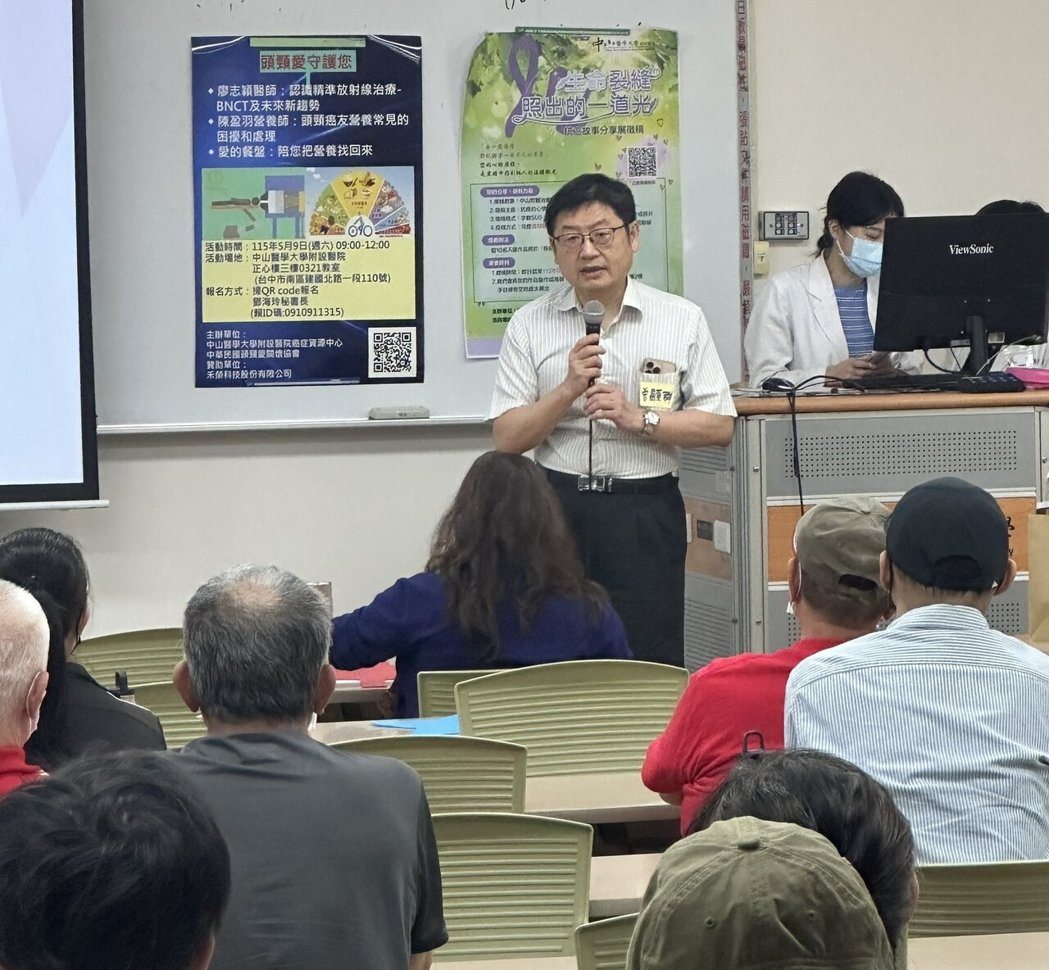
Director Hsien-Chun Tseng, Department of Radiation Oncology, Chung Shan Medical University Hospital. Provided by the Association.
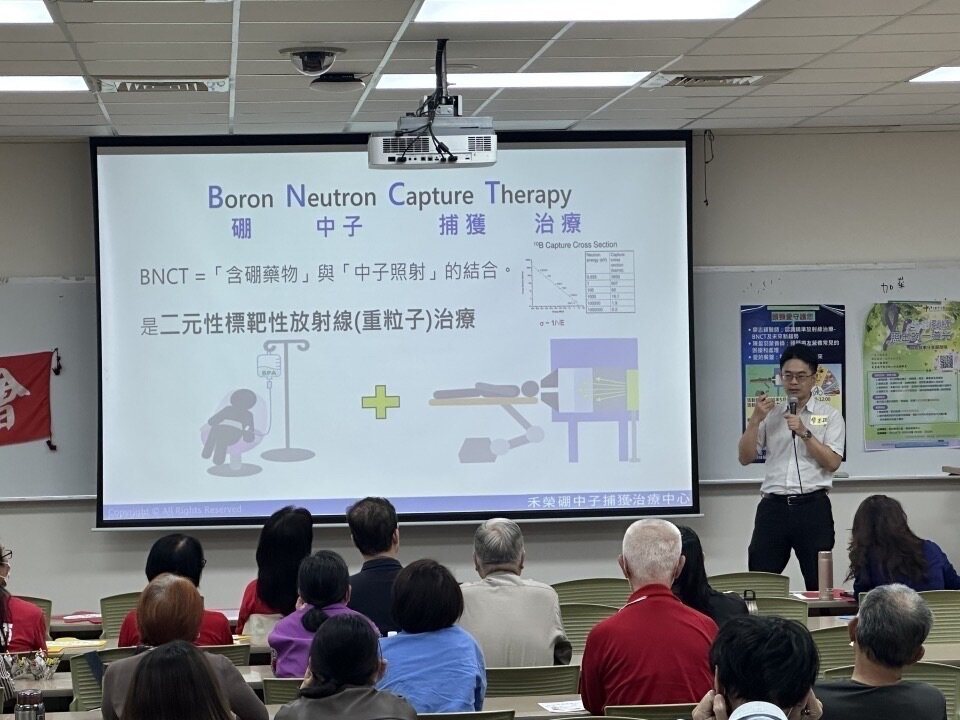
Attending Physician Chih-Ying Liao, Photon Radiotherapy Division, Department of Radiation Oncology, China Medical University Hospital. Provided by the Association.